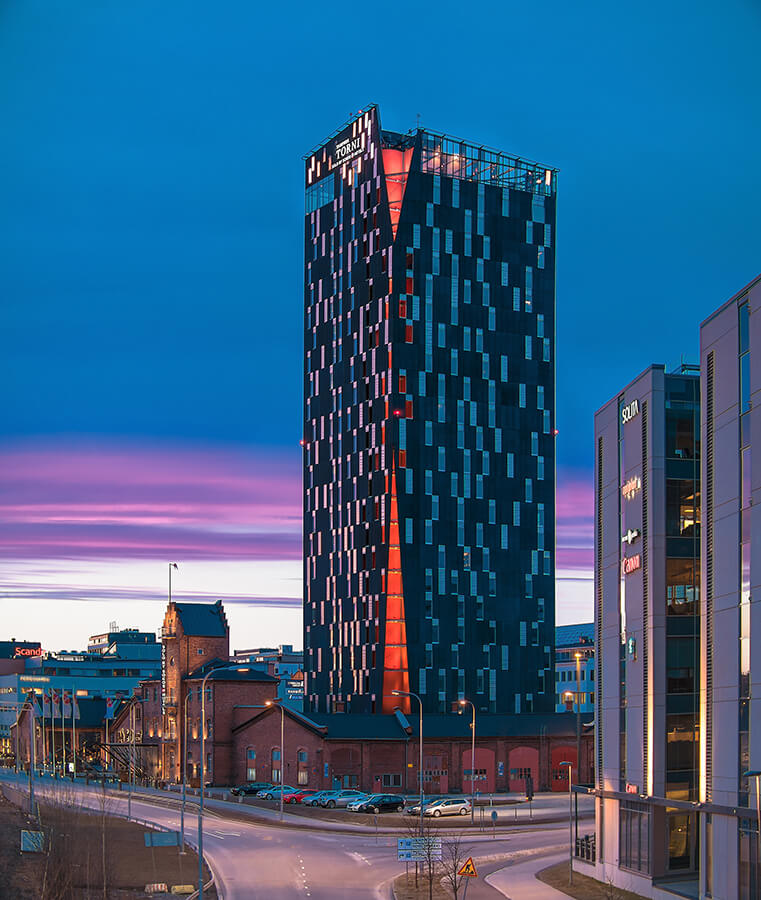
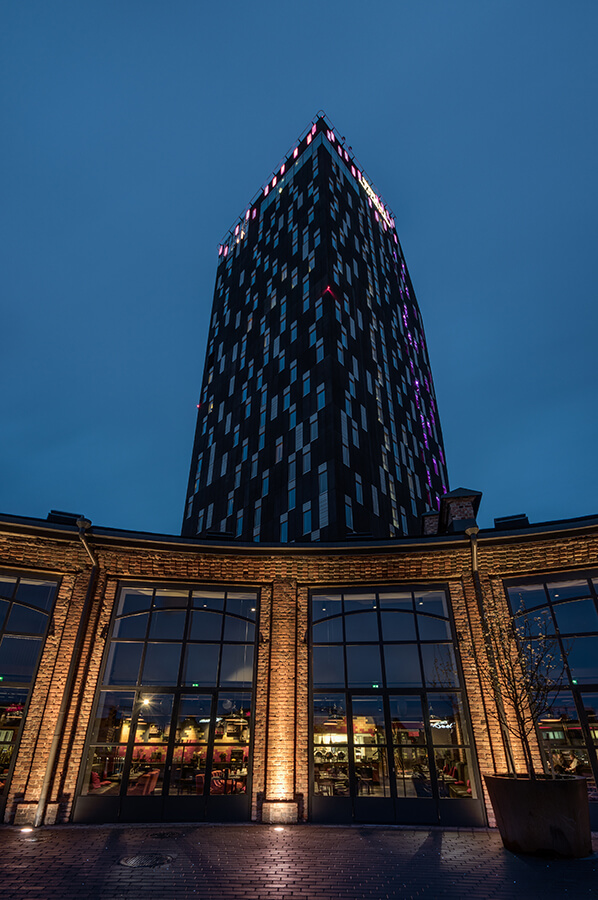
The Signal light art emphasizes the hotel’s identity
Architecture and Location
Solo Sokos Hotel Torni Tampere is located in the heart of Tampere. The building complex consists of two interconnected parts: the Veturitallit (Engine Sheds), protected by the National Board of Antiquities, and a new hotel building. This, Finland’s tallest hotel, stands 88.5 meters high and has 25 floors. The Veturitallit represent the typical red-brick architecture of Tampere. The new hotel’s black-stained concrete facade is rhythmically accented by light-reflecting stainless steel panels. The building is a significant landmark, visible throughout the city, reshaping Tampere’s low-rise urban landscape in a new way.
Information

Lighting Project of the Year 2015
Type Facade Lighting
Location Tampere
Year of Completion 2015
Client Sokotel
Lighting Aesthetics
The design was based on urban, architectural, and commercial needs. The facade of the Veturitallit is highlighted with warm-toned light, creating a calm and dignified impression. The lighting concept for the Tower follows the rhythm of the architecture and allows for variations in natural light reflected from the stainless steel surfaces. The upper part of the Tower features a diffused media surface that follows the rhythm of the stainless steel panels, wrapping around the entire peak. The theme presented has 360-degree visibility. The architecturally dominant chamfer of the building is accentuated with dynamic lighting. The lighting solution is simultaneously restrained yet vibrant, enlivening the urban landscape.
The changing light situations and animations at the top of the Tower adapt to the time of day, weekdays, and holidays. On the hour, the peak bursts into three-minute light effects. The lively, moving, and controlled color schemes of the lighting are a constantly evolving part of Tampere’s urban environment during the dark hours. The movement, variability, and color schemes of the light are calm, making the lighting enduring. Each lighting situation has a carefully considered theme. The lighting of the chamfer slowly follows the rhythm of the media surface, and the colored lighting emphasizes the reddish hue of the architecture.
The dynamic lighting is designed with architecture, urban aesthetics, and aesthetic durability in mind. The biggest challenge was finding the right way to create sufficient dynamism for a commercially viable hotel and to invigorate the evening life and appearance of the city center. The installation, located on the city’s rooftop, highlights the hotel’s unique architecture, its functions, and creates a new identity and content for the city’s evening life.